Planning

This weekend is the start of Third Season for elk and deer. Steve and I liked what we saw last year in the Flattop Mountains in northwestern Colorado, and will be going back, along with Noel, my partner on my first successful hunt four years ago. This is my sixth backpack hunt now, and each year…
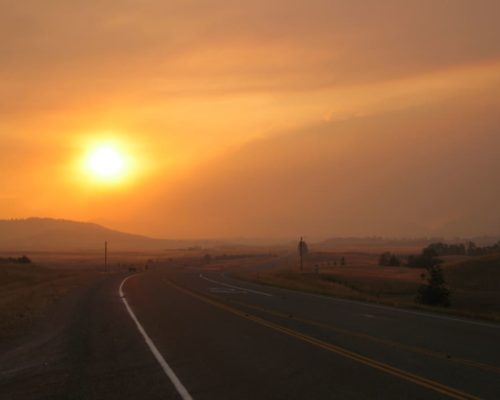
For the past month I have been watching the Ferguson Fire, a 100,000-acre blaze on the western outskirts of Yosemite National Park, to assess and predict its effects on my planned backpacking trip there next week. I had to change my destination airport (to Reno instead of Fresno) and I’m expecting some smoke, but fortunately…

I have said this before, and continue stand by it: there is a right way to backpack: equip yourself with the gear, supplies, and skills that are appropriate for the conditions and your trip objective. Among the conditions that I consider (there are about 10; view the full list), the weather — specifically temperatures, precipitation,…

Public Service Announcement If you have not already, you should apply for your backcountry permit for Rocky Mountain National Park if you plan to attempt the Pfiffner Traverse this summer. The permit system in Rocky Mountain is similar to Glacier and Yellowstone: camping is permitted only in specific backcountry sites and a few at-large zones.…
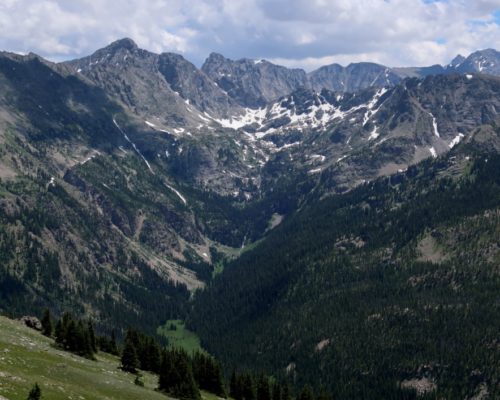
Last week on r/Ultralight, member u/TeddyBallgame1999 asked multiple questions about the Wind River High Route, including: The essence of this question — “How long will it take me?” — has been posed before, in the context of the WRHR and similar routes like the Kings Canyon High Basin Route, Pfiffner Traverse, Glacier Divide Route, and…

You can’t shoot an elk or mule deer until you find one. Duh. And for a beginner DIY hunter, learning to find one is probably the biggest challenge — at least, that was my experience. Where will the big game be, given the location, season, current and recent conditions, and time of day? Otherwise, hunting is…

Before I jump into the third and final step in creating a pace chart for an ultra marathon, I thought it would be helpful to review the process so far. Step 1: In a spreadsheet we created a list of key landmarks on the course, and added pertinent information like distances between these landmarks and where…

The scariest part of creating a pace chart for an ultra marathon is the need to settle on a goal finishing time. I say scary because: A goal time, and the associated splits, are something of a commitment; It requires an honest assessment of physical and mental preparedness; and, It’s difficult to account for all…

Unless you have created a pace chart for an ultra marathon before or found a template online, the process begins with a blank spreadsheet. Personally, I use Google Sheets, a free platform that is easily shareable and that I can access from all of my devices (e.g. desktop, Chromebook, smartphone). Critical data I start by importing…

During every ultra marathon, I carry with me a homemade pace chart that looks something like this: My process and end-result continually evolve, due to past learnings and to the particularities of the next race. But I feel confident now in sharing a framework for creating a pace chart for an ultra marathon. Ultras versus…